Every year, thousands of students apply through the Madhya Pradesh Tribal Affairs Automation System (MPTAAS) expecting timely financial assistance for their education. While most discussions focus on eligibility, login steps, or payment status, a deeper and more important question often remains unexplored: https://mptaasscholarships.com/
How much money is actually reserved in the state budget for SC, ST, and OBC students, and how does that allocation impact MPTAAS disbursement? Understanding the financial backbone behind the scholarship system helps students interpret delays, approval patterns, and payment cycles more realistically. This article examines how state budget allocation works, how funds are reserved, how they are distributed through departments, and how that directly affects scholarship beneficiaries.
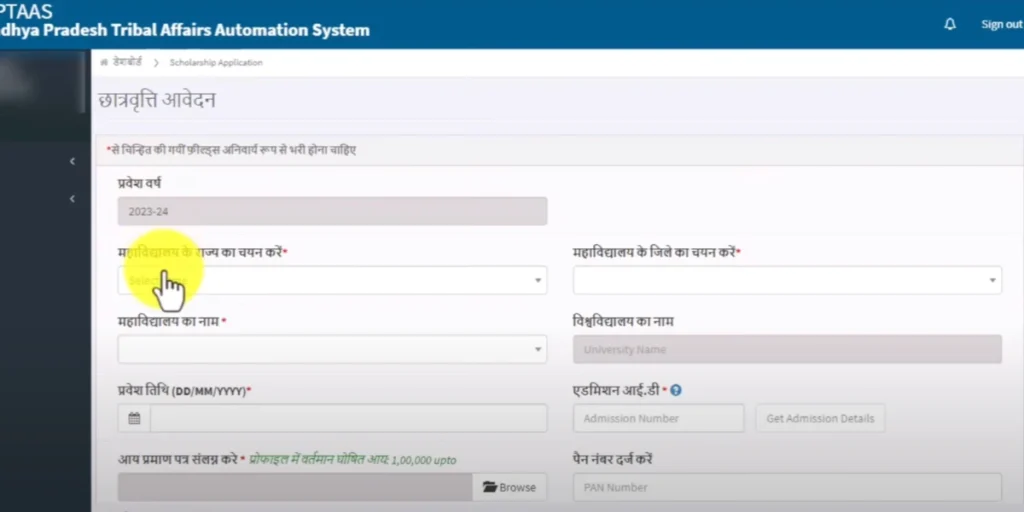
1. The Budgetary Foundation of MPTAAS
1.1 MPTAAS Is a Distribution Platform, Not a Funding Source
MPTAAS itself does not generate funds. It is a digital execution system used by the Tribal Affairs Department, Scheduled Caste Welfare Department, and Backward Classes Welfare Department. The actual money comes from the annual state budget approved by the Madhya Pradesh Legislative Assembly.
1.2 Where Does the Scholarship Budget Appear?
Scholarship funds are allocated under specific welfare budget heads such as Post-Matric Scholarship (SC), Post-Matric Scholarship (ST), Post-Matric Scholarship (OBC), and Educational Incentive Schemes. Each head carries a fixed annual allocation that determines how many students can be supported.
2. How State Budget Allocation Works
2.1 Annual Budget Cycle
The budget process generally follows this structure: departments estimate projected beneficiary numbers, financial requirements are submitted to the Finance Department, the proposed allocation is included in the annual state budget, the Legislative Assembly approves the budget, and funds are released in phases during the financial year. This cycle directly impacts when scholarship payments become possible.
2.2 Allocation vs Actual Expenditure
It is important to distinguish between budget allocation (amount reserved on paper), budget release (amount actually made available to the department), and actual expenditure (amount disbursed to students). Sometimes allocation may appear large, but phased release affects payment timing for beneficiaries.
3. Reserved Funds for SC, ST, and OBC Students
3.1 Category-Based Budget Segregation
Funds are typically separated by category.
| Category | Budget Head | Allocation Nature |
|---|---|---|
| SC | Scheduled Caste Post-Matric Scholarship | Dedicated |
| ST | Tribal Post-Matric Scholarship | Dedicated |
| OBC | Backward Class Scholarship | Limited and conditional |
SC and ST allocations are often protected under special component plans, while OBC allocations may be comparatively flexible.
3.2 Special Component and Tribal Sub-Plan Framework
Historically, state governments earmark funds under the Scheduled Caste Sub-Plan (SCSP) and Tribal Sub-Plan (TSP). These frameworks ensure that a certain percentage of total state expenditure benefits SC and ST communities. Scholarship schemes fall under these protected allocations, providing greater stability for these categories.
4. Estimating How Much Is Reserved Per Student
4.1 Scholarship Rate Structure
Scholarship amounts depend on course group, hosteller or day scholar status, and tuition fee reimbursement eligibility.
| Course Group | Hosteller Monthly Allowance | Day Scholar Allowance |
|---|---|---|
| Professional Courses | Higher slab | Moderate slab |
| General Degree Courses | Mid slab | Lower slab |
| Senior Secondary | Basic slab | Minimal slab |
If we multiply per-student allocation by expected beneficiary count, we can estimate total budget requirements for the year.
4.2 Hypothetical Budget Illustration
If 2,00,000 students apply and the average annual support per student is ₹10,000, then the estimated annual requirement would be ₹2,000 crore. However, actual sanctioned budgets may vary depending on financial constraints and policy decisions.
5. Why Payments Sometimes Get Delayed
5.1 Phased Fund Release
Even if total allocation is high, funds are often released quarterly, in batches, or based on verified application numbers. This phased approach can create a temporary backlog in disbursement.
5.2 Adjustment Against Previous Year Liabilities
Sometimes part of the current year budget is used to clear pending dues from previous academic sessions. This reduces immediate liquidity for new approvals and extends processing timelines.
5.3 Increase in Beneficiary Count
If application numbers exceed initial projections, supplementary budget approval may be required and payment timelines extend. Unexpected growth in applications directly impacts allocation adequacy for the current cycle.
6. MPTAAS Sanction vs Budget Availability
6.1 Sanction Does Not Always Mean Immediate Payment
An application marked "Sanctioned" indicates administrative approval. However, actual disbursement depends on fund availability, and treasury clearance requires allocated funds under the correct budget head. If allocation for that quarter is exhausted, payment waits for the next release cycle.
6.2 Treasury Control Mechanism
Before disbursement, the department generates a sanction order, treasury checks the available balance under the budget head, and if funds are sufficient DBT is initiated. If not, payment is queued for the next cycle. This mechanism prevents overspending beyond legislative approval limits.
7. Comparing Allocation Trends Across Categories
7.1 SC and ST Allocation Stability
Because of constitutional mandates and sub-plan structures, SC and ST allocations are generally more protected and consistent across academic years.
7.2 OBC Allocation Variability
OBC scholarships may experience income threshold revisions, budget reallocation adjustments, and policy-driven cap changes. This sometimes results in stricter scrutiny or delayed expansion of benefits for OBC beneficiaries.
8. Transparency and Public Financial Reporting
State budgets are public documents. They provide department-wise allocation, scheme-specific expenditure, revised estimates, and actual expenditure comparison. Students can refer to annual budget documents to understand whether scholarship allocation increased or decreased, and whether revised estimates suggest a shortfall. Budget transparency helps interpret payment patterns logically.
9. Long-Term Financial Sustainability of MPTAAS
9.1 Factors Influencing Future Allocation
Future allocation depends on state revenue performance, education enrollment growth, policy priorities, and political commitments to social welfare. If higher education enrollment among SC/ST/OBC students increases significantly, budget allocation must expand proportionally.
9.2 Risk of Underestimation
If projected beneficiary numbers are underestimated, supplementary grants may be needed and processing delays increase. Accurate data forecasting is crucial for smooth and timely disbursement to all eligible students.
10. Key Observations
MPTAAS does not control fund generation — budget allocation is approved annually by the state legislature. Funds are category-specific and scheme-specific, and sanction status depends on administrative approval while payment depends on available treasury balance. An increase in applications directly affects fund sufficiency, and understanding these structural realities reduces confusion about payment cycles.
Frequently Asked Questions
Conclusion
MPTAAS operates within a defined financial ecosystem governed by annual state budget allocations. The amount reserved for SC, ST, and OBC students is not arbitrary but determined through legislative approval, departmental projections, and fiscal planning. While scholarship rates per student are predefined, the total number of beneficiaries and fund release cycles significantly influence payment timing.
SC and ST allocations often enjoy structured protection under sub-plan frameworks, while OBC funding may fluctuate based on policy and fiscal constraints. When students recognize that sanction, treasury approval, and fund release operate within budget boundaries, they can interpret delays more rationally and plan accordingly. A transparent connection between scholarship disbursement and state financial planning strengthens trust in the system and highlights the importance of responsible fiscal management in supporting educational equity.